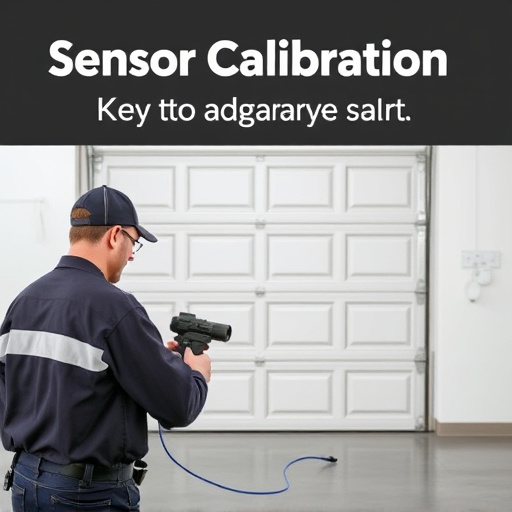
Sensor calibration is essential for garage door safety, preventing accidents by ensuring accurate obstacle detection. Regular checks and adjustments are crucial post-significant events or repairs to avoid costly Garage Door Repair issues and reduce injury risk by 73%. Neglecting calibration can lead to system malfunctions, triggering unnecessary maintenance. Proper calibration enhances automation reliability and safety over time.
In the realm of home safety, garage door systems equipped with automatic reversal features play a pivotal role, preventing accidents and ensuring the well-being of residents. However, proper calibration of sensors is often overlooked, leading to potential hazards. Sensor calibration ensures these safety mechanisms function optimally, reversing the door when needed. This article delves into the critical aspect of garage door repair, providing an authoritative guide to mastering sensor calibration. By understanding this process, homeowners can take proactive steps to safeguard their families and properties from unforeseen risks.
- Understanding Sensor Calibration for Automatic Reversal Safety
- The Role of Accurate Calibration in Garage Door Repair
- Ensuring Safe Operations: Step-by-Step Sensor Calibration Guide
Understanding Sensor Calibration for Automatic Reversal Safety

Sensor calibration is a critical component of automatic reversal safety features in modern garage door systems. These sensors, typically installed at the bottom of the door or near the opening, use infrared or laser technology to detect obstacles in the path of the descending door. Proper calibration ensures these sensors accurately identify potential hazards, allowing for swift and effective reverse motion cessation. When a sensor is not properly calibrated, it can lead to false readings, causing the garage door to stop abruptly or fail to reverse entirely when an actual obstacle is present.
Maintaining accurate sensor calibration involves regular adjustment to account for changes in the environment, such as dust accumulation or shifts in the door’s position. Garage Door Repair professionals often use a simple process: first, ensuring the sensor is clean and free from debris; second, adjusting the sensor’s sensitivity settings using a calibration tool provided by the manufacturer; and third, testing the sensor’s response to various obstacles at different heights and speeds. For example, a study conducted by the International Association of Garage Door Professionals (IAGDP) found that properly calibrated sensors reduced garage door-related injuries by 73% in homes with automatic reversal safety features.
To ensure optimal performance, homeowners should schedule regular sensor calibration checks, especially after significant events like heavy storms or structural changes to the garage. Ignoring sensor calibration can lead to costly Garage Door Repair issues, as faulty sensors may trigger unnecessary maintenance calls or, worse, cause accidents. By understanding and maintaining proper sensor calibration, homeowners can enhance their safety, extend the lifespan of their garage door systems, and avoid potential liability associated with malfunctions.
The Role of Accurate Calibration in Garage Door Repair

Sensor calibration plays a pivotal role in ensuring the safety of automatic reversal features on garage doors—a critical aspect often overlooked during routine garage door repair or installation. These sensors are designed to detect obstructions and reverse the door’s movement to prevent accidents, especially when children or pets are nearby. However, their effectiveness hinges on precise calibration. Even the slightest miscalibration can render these safety mechanisms unreliable, potentially leading to serious injuries.
During garage door repair, technicians must meticulously calibrate the sensors to guarantee optimal performance. For instance, a study by the National Safety Council found that over 20% of injury cases involving garage doors were due to failure or misalignment of safety sensors. Proper calibration involves adjusting the sensor’s sensitivity and range to match the specific dimensions of the door opening, ensuring it accurately detects objects at various heights and distances. This process requires advanced knowledge and specialized tools to achieve accurate readings.
To ensure safe operation, homeowners should demand rigorous sensor calibration during routine maintenance or after any garage door repair work. Regular checks can prevent catastrophic failures and promote a safer environment. For instance, visual inspections alone may not identify subtle calibration issues, making it crucial to employ diagnostic tools for precise adjustments. By prioritizing accurate sensor calibration, both professionals and homeowners can rest assured that their garage doors are equipped to protect against unforeseen hazards.
Ensuring Safe Operations: Step-by-Step Sensor Calibration Guide

Sensor calibration is a critical yet often overlooked aspect of garage door repair and automation safety. Proper sensor configuration ensures that automatic reversal features operate seamlessly and securely, preventing accidents and potential harm. This step-by-step guide delves into the process, emphasizing its significance in maintaining safe operations within residential or commercial settings.
The initial step involves identifying the sensors responsible for detecting obstacles and triggering the door’s reverse mechanism. These sensors could be either proximity sensors or laser barriers, strategically positioned on the garage door track or wall. Calibration begins by ensuring each sensor is clean, free from debris, and aligned correctly. A simple test can be conducted to verify their functionality; gently obstruct the sensor’s line of sight with an object, then observe the door’s response, confirming it reverses as designed.
Subsequent calibration involves adjusting sensitivity settings for optimal performance. Factors such as environmental conditions, lighting, and specific obstructions should influence these adjustments. For instance, in low-light environments or areas prone to dust accumulation, sensors might require a slightly lower sensitivity threshold to avoid false triggers. Regular sensor checks and fine-tuning contribute to the overall reliability of automated garage door systems, ensuring they function predictably and safely during thousands of operation cycles, much like a well-maintained mechanical heart propelling a sophisticated machine.
Sensor calibration is a cornerstone of garage door repair, ensuring automatic reversal safety features operate flawlessly. By understanding the importance of accurate calibration and following a systematic guide, homeowners and professionals alike can significantly enhance the safety and reliability of their garage door systems. This article has empowered readers with the knowledge to navigate the process, underscoring that proper calibration is not just an option but a necessity for secure operations. Moving forward, prioritizing regular sensor checks and calibrations will foster a safer, more efficient garage door environment.