This site is a homeowner’s guide to garage door repair: how a garage door system works, the parts that wear out and break most often, which fixes are safe to do yourself, and when a repair should go to a trained technician. The articles below go into individual parts and problems. This page is the overview.

A garage door is usually the largest moving object in a house. It weighs a few hundred pounds, moves every day, and is held in balance by springs under high tension. That’s why small problems are worth catching early, and why some repairs should never be done by guesswork.
How a garage door system works
- Springs do the heavy lifting by counterbalancing the door’s weight. Most modern doors use torsion springs mounted on a bar above the door; older and lighter doors often use extension springs running along the horizontal tracks.
- Cables and drums connect the springs to the bottom corners of the door.
- Rollers and tracks guide the door up and down.
- Hinges connect the panels and let them bend around the curve of the track.
- The opener moves the door, but it isn’t designed to lift its full weight. A properly balanced door can be lifted by hand.
- Safety sensors (photo eyes) near the floor and the opener’s auto-reverse feature stop the door from closing on people, pets or cars.
The most common repairs
Broken springs
Springs are rated for a limited number of open-and-close cycles, and eventually they break, often with a loud bang. A door with a broken spring becomes very heavy and may not open at all. If one spring of a pair breaks, replacing both is usually recommended, since the other is close behind.
Frayed or snapped cables
Cables wear where they wrap around the drums and can snap, leaving the door hanging crooked. See fixing a broken garage door cable.
Worn rollers and misaligned tracks
Worn rollers make a door noisy and jerky. Bent or misaligned tracks can make it bind or come off its path. See realigning rollers for smooth tracking and common worn parts and grinding noises.
Sensor problems
If the door reverses for no reason or won’t close, the photo eyes may be dirty, misaligned or blocked. Cleaning and realigning them is often the fix. See keeping garage door sensors reliable.
Opener problems
Stripped gears, worn drive belts or chains, failed logic boards, and remote or keypad issues. Some opener problems are simple adjustments; others mean it’s time for a new opener.
Damaged panels and weather seals
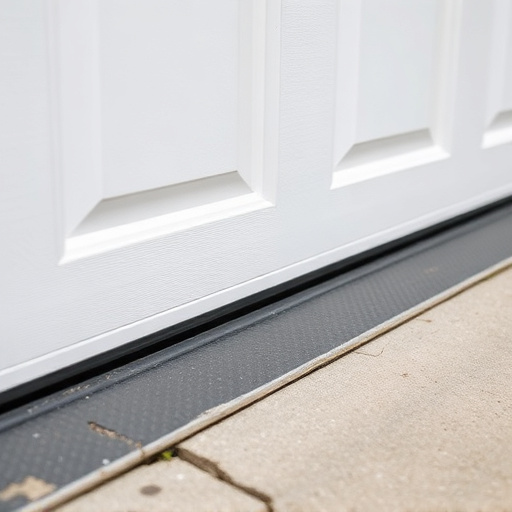
Dented panels, cracked wood, and worn bottom seals that let in dust, water and pests. See panel dent repair and weatherproofing treatments.
What’s safe to do yourself, and what isn’t
Reasonable for most homeowners:
- Cleaning and realigning safety sensors.
- Lubricating rollers, hinges and springs with a garage door lubricant (not grease on the tracks). See reducing noise with lubrication.
- Tightening loose hardware on hinges and brackets (not the bottom brackets that hold cables).
- Replacing remote batteries and reprogramming remotes.
- Replacing a worn bottom weather seal.
Leave to a trained technician:
- Anything involving torsion or extension springs. They store enough energy to cause serious injury.
- Cable and drum replacement, and the bottom brackets that hold cables under tension.
- Straightening or replacing tracks on a door that’s off its rollers.
- Any door that is stuck partway open or hanging crooked.
See DIY repairs, warranty claims and when to hire a pro.
Monthly safety checks
- Balance test: disconnect the opener with the release cord, then lift the door by hand to about waist height. A balanced door stays put. One that slams down or flies up needs a spring adjustment by a technician.
- Auto-reverse test: place a piece of 2x4 lumber flat on the floor in the door’s path and close the door. It should reverse when it touches the board.
- Sensor test: wave an object through the photo-eye beam while the door is closing. It should reverse.
- Visual check: look for frayed cables, worn rollers, loose hardware and gaps in the seals.
Repair or replace?
Most garage door problems are repairable. Replacement starts making sense when the door has multiple damaged panels, the door is badly out of square, parts are no longer available for an older model, or you want better insulation, security or curb appeal. Openers are often replaced when they’re old, noisy, lack modern safety features, or need an expensive repair.
Choosing a garage door technician
- Check licensing requirements in your state, and verify the license. In Arizona, check with the Arizona Registrar of Contractors.
- Ask for a written estimate that lists parts and labor separately.
- Ask what the parts and labor warranties cover.
- Be cautious of very low advertised prices that grow once the technician arrives.
Industry information is available from the Door & Access Systems Manufacturers Association and the International Door Association.
For the basics in one place, see the complete guide to garage door repair. Local guides are also available for garage door repair in Tucson and emergency garage door repair. The newest articles on this site are listed below.
Category: Garage Door Repair

Understanding Garage Door Wear: Common Parts & Grinding Noise
Read more →Garage Door Repair — Complete Guide
Read more →
Quick Garage Door Repair: Fix Broken Cable, Restore Functionality
Garage door repair begins with assessing broken cables for damage, length, and functionality. Early.......
Read more →
Expert Strategies for Commercial Garage Door Repair Durability
Commercial garage door repair addresses unique challenges posed by frequent use, harsh conditions, a.......
Read more →

Remote Access Revolutionizes Garage Door Repair Efficiency
Remote programming assistance revolutionizes garage door repair by enabling technicians to diagnose.......
Read more →

Precision Garage Door Repair: Realign Rollers for Perfect Tracking
Accurate garage door repair involves assessing misalignment through visual cues and measuring tools........
Read more →
Smooth Operations: Reduce Garage Door Noise with Lubrication
Roller lubrication is a key aspect of garage door repair, addressing noise issues caused by friction.......
Read more →

Panel Dent Removal: Boost Curb Appeal, Home Value
Garage door repair emphasizes panel dent removal for curb appeal and home value preservation. Profes.......
Read more →

Maintain Reliable Garage Door Sensors with Regular Cleaning
Safety sensors in garage door systems require regular cleaning and maintenance to prevent debris bui.......
Read more →